




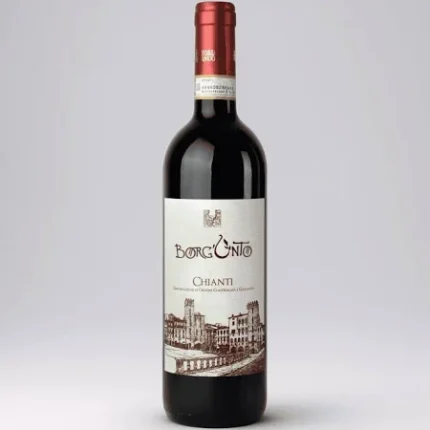
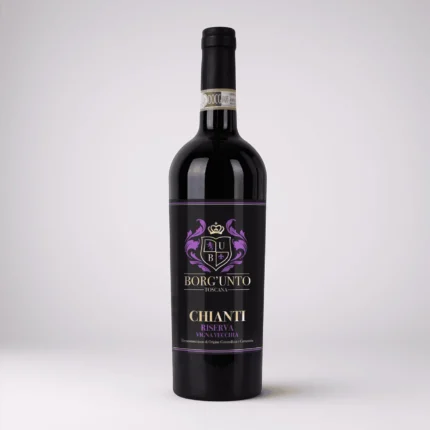
Tuscan Chianti Wine
The History
Ruby red in color, full-bodied and recognizable on the palate.
Chianti is the foundation of the Tuscan table, of its love for tradition and the beautiful things to experience together with the people we love, toasting to life. Regarding its name, it is hypothesized that it may derive from the Latin term "clangor," meaning noise, to indicate the many hunting trips, or from the Etruscan "clante," an Etruscan name for some families who gathered together, or understood in the sense of "clante" but with the intent of referring to water. Its most recent and detailed origins are found as early as the 13th century with the "Lega del Chianti," of Florentine origin, established to regulate the territories of Radda, Gaiole, and Castellina, rich in Sangiovese-based wine.
In the Middle Ages, the Chianti culture was already flourishing, and the Florentine area was working on its development and tradition. In 1398, a notarial document records the term Chianti, which was used to refer to the wine produced in this area. About 300 years later, exports of wine, especially to England, were no longer occasional.
Chianti was conquering Europe.
In 1716, Grand Duke Cosimo III de' Medici, with the publication of the “Bando Sopra la Dichiarazione dé Confini delle quattro Regioni Chianti, Pomino, Carmignano, and Val d'Arno di Sopra”, indicated the boundaries of the areas within which wines could be produced, establishing control bodies over wine production in order to prevent fraud during production and shipping.
In 1932, modern legislation and the significantly increased production needs led the government to include other territories in the Chianti production zone and it was thus divided into seven territories:
Classico (including the old Chianti), Colli Aretini, Colli Fiorentini, Colline Pisane, Colli Senesi, Montalbano, Rùfina and in the nineties the Montespertoli area was created in the Province of Florence.
In 1924, a group of 33 producers founded the Consortium for the protection of Chianti wine and its trademark. In 1932, "Chianti Classico" became the trademark of the original and historic vineyards where it is produced. Regarding its composition, we can say that in the 18th century, Chianti was based solely on the vinification of Sangiovese grapes. The real epochal change came with the introduction of Baron Bettino Ricasoli's regulations in 1840: 70% Sangiovese, 15% Canaiolo, and 15% Malvasia. Currently, Sangiovese is used (at least 70%). Cabernet Sauvignon and Cabernet Franc grapes combined cannot exceed 15%, while any white grape varieties (especially Malvasia Bianca Lunga) cannot exceed 10%.
The wine can be classified as “riserva” after two years of aging.
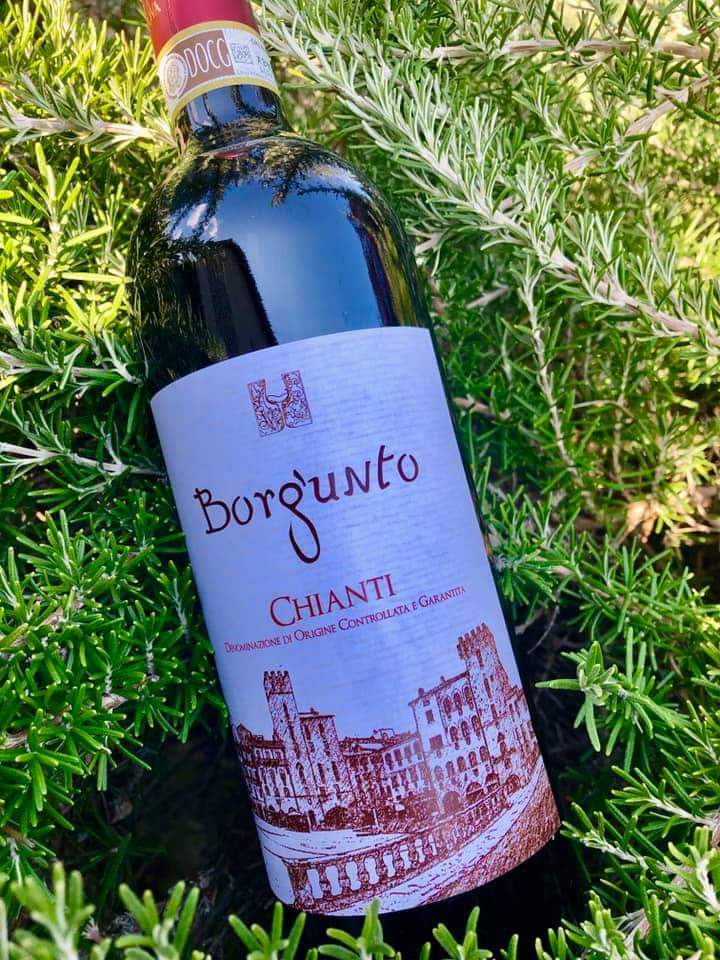
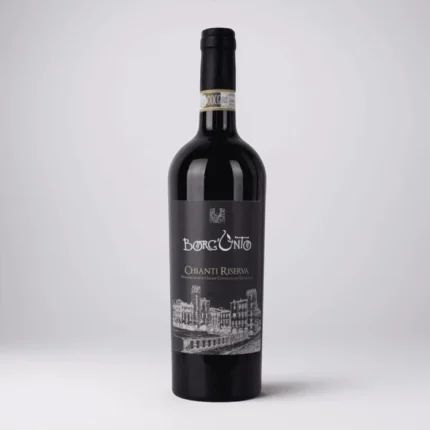
Discover our Chianti Riserva DOCG Vigna Vecchia Borgunto and experience the authenticity of Tuscany in every glass.
Discover the Product